Digital avatar
Virtual try-on, on a true digital copy of you
Virtual try-on is rendering a specific garment, in a specific cloth and cut, onto an accurate three-dimensional model of your own body — a digital avatar — so you can judge it before it physically exists. It is not a photo overlay, and the avatar is not a mannequin in approximately your size.
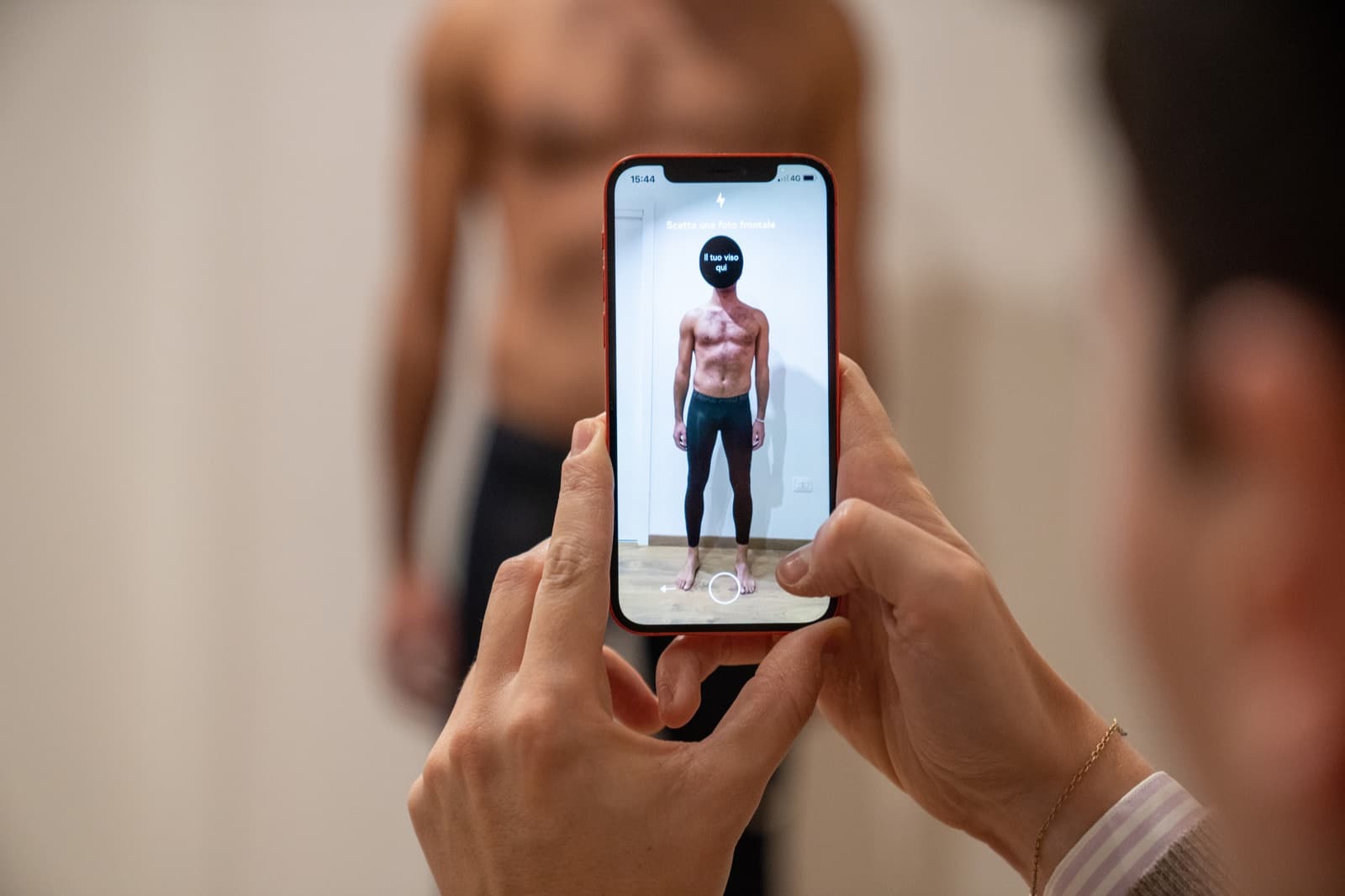
What the avatar is
What is a digital avatar?
A digital avatar is a dimensionally accurate model of one person, generated from their photographs and measurements. The distinction from a generic model in a nominal size is the whole value: a size 50 mannequin tells you how a garment fits a size 50, which is a different question from how it fits you.
Caprice builds the avatar from a guided photo session plus the measurement profile — nine body measurements, and the posture and shoulder slope that determine how cloth actually hangs. Once it exists, it is reused: you are measured once, and every subsequent piece is fitted against the same model.
Judging a garment that does not exist yet
Why does virtual try-on matter for made-to-measure?
For off-the-rack clothing, virtual try-on is a convenience — the sample exists, and you could go and try it on. For made-to-measure and bespoke it is the only option, because there is nothing to try. The garment will be cut for you after you commit, and until now that meant committing on the strength of a fabric swatch and a drawing.
That is the gap this closes. Seeing the actual cloth, in the actual cut, on your actual proportions turns a commission from an act of faith into a decision.
Being tailored digitally
Can I adjust the fit on the avatar?
Yes, and this is the part that changes the economics. Adjust a sleeve length or where the trousers break on the avatar, and the change is applied to the pattern before anything is cut. The alteration happens in software rather than after delivery.
Compare that with the conventional sequence: order, wait, receive, discover the sleeve is long, return or pay a tailor, wait again. Digital fitting collapses the iteration loop from weeks to minutes, and it removes the return entirely — which matters commercially as well as environmentally, since returns are the single largest source of waste in online apparel.
- Adjustments go to the pattern, not into a returns queue
- The same avatar is reused for every future commission
- Fit corrections update your profile so they do not recur
What it does not do
How accurate is virtual try-on?
Honest limits are worth stating. A rendering predicts drape from measurements and cloth properties; it is a very good guide to proportion, length and silhouette, and a weaker guide to how a particular weave will feel in the hand or behave after a season of wear. Colour on a screen is not colour in daylight.
This is one reason the human advisor stays in the loop rather than being replaced by the visualisation. The avatar answers whether the garment will fit and how it will sit. Whether it is right for you, and whether the cloth will do what you want, is still a judgement — and photo-based measurement plus augmented-reality product visualisation is the technology Caprice Bespoke was listed in the Italian Trade Agency's catalogue for MWC 2025 on the strength of, not a claim to have solved taste.
Common questions
How is the digital avatar created?
From a guided photo session in the app combined with your measurement profile. The app captures nine body measurements along with your posture and shoulder slope, and builds a photorealistic three-dimensional model from them. The session is designed to be done once: the avatar persists on your account and is reused for every garment you subsequently view or commission.
Who can see my avatar and my measurements?
Your avatar and measurement profile belong to your account. Your style advisor works from them in order to advise on fit, and a maker receives the measurements needed to produce a garment you have commissioned. They are not a public part of your profile, and they travel with your account rather than with any individual advisor or brand.
Does virtual try-on work for accessories as well as clothing?
The avatar is most useful where fit is the question, which means tailoring first — jackets, trousers, shirts. For accessories such as ties and pocket squares, where there is no fit problem to solve, visualisation answers a different question: how the piece works with the rest of an outfit. Both are supported, but the value is concentrated in the tailored categories.