Proof of purchase
A digital product passport for everything you own
A digital product passport is a transferable digital record attached to one individual garment, holding what it is, who made it, when, and to whose measurements. Caprice issues one with every purchase as a proof-of-purchase NFT, paired with the physical piece.
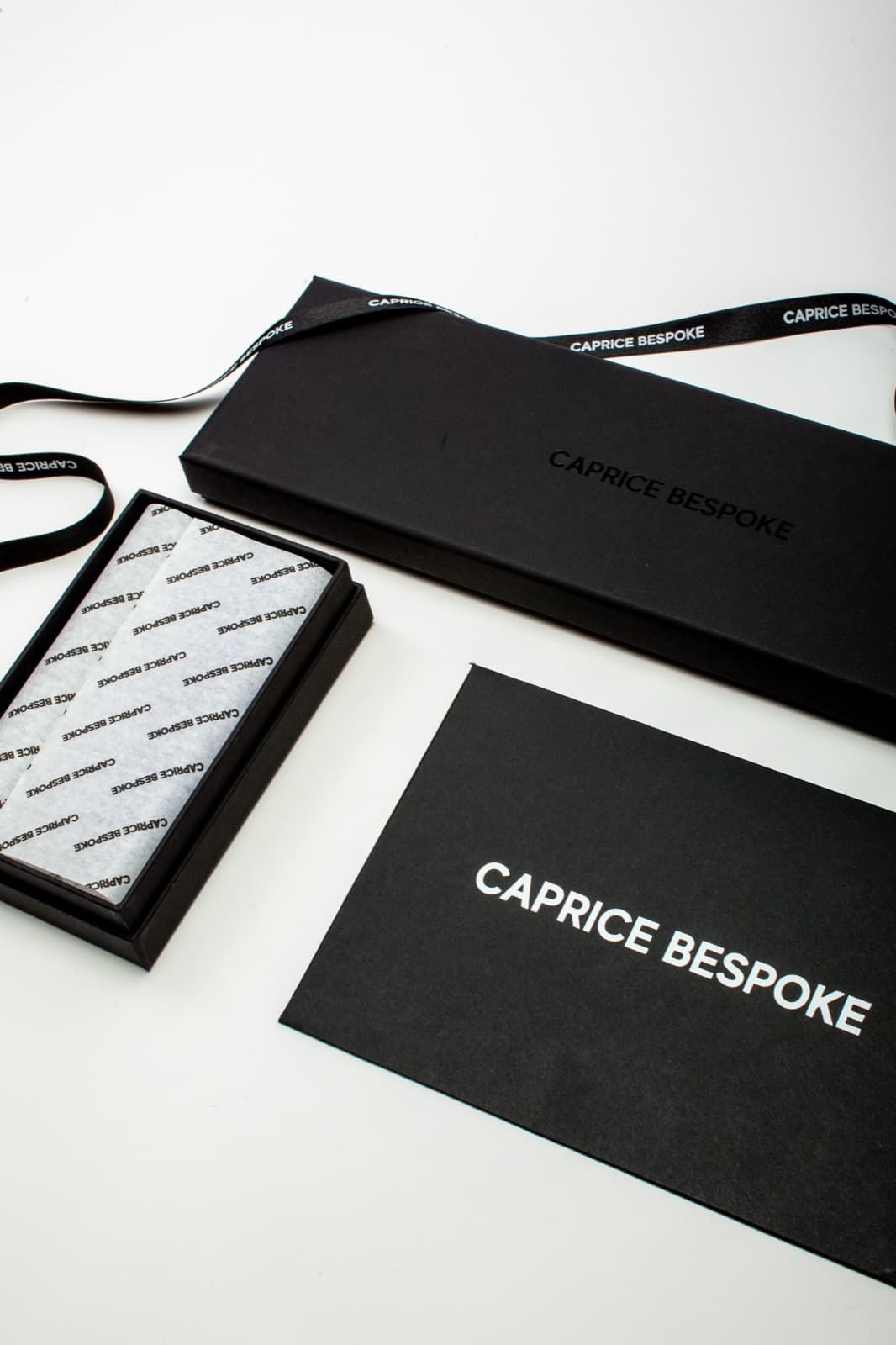
What the passport records
What is in a digital product passport?
Three categories of information. Identity: what the garment is, its cloth, its construction, and the maker. Provenance: when it was produced and for whom, which is what establishes that it is genuine. Fit: the measurements it was made to, which is the piece of information that normally disappears the moment a garment leaves its first owner.
Because the record is attached to the item and is transferable, all three survive a change of ownership. That is the design goal — not a certificate framed on a wall, but a record that keeps working after the first sale.
Why this is becoming standard
Is a digital product passport a legal requirement?
The direction of travel is regulatory, not just commercial. The EU's Ecodesign for Sustainable Products Regulation entered into force on 18 July 2024 and establishes the Digital Product Passport as a framework requirement, with textiles and apparel named a priority category. It applies to companies selling into the EU regardless of where they are based, with textile requirements expected to phase in from around 2027.
To be precise about what Caprice's passport is and is not: it is a proof-of-purchase and provenance record built for ownership, resale and access, and it overlaps with what the regulation will require — item-level identity and traceability — without being a claim of ESPR compliance. The regulation is the reason item-level records are becoming normal across the industry; it is not a claim we are making on the product's behalf.
What it unlocks
What can I do with the proof-of-purchase NFT?
The token carries the brand experiences attached to that purchase — an invitation to a show, access to a private drop, content released to holders. And because it is transferable independently of the garment, the access and the object can hold value separately: you can sell the piece and keep the invitation, or the reverse.
That separation is unusual and worth understanding before you buy. It means the passport is not merely a receipt; it is an asset with its own market, tied to the brand rather than to the cloth.
- Proof of purchase and provenance, paired with the physical piece
- Carries brand experiences and holder-only content
- Transferable with or without the garment itself
How it makes resale work
How does a digital product passport help me resell a garment?
Selling secondhand luxury is hard for three reasons, and the passport addresses all three. The seller has to prove the item is genuine: the provenance record does that. The seller has to describe its condition and specification accurately: the identity record does that. And the buyer has to work out whether it will fit them: the measurement record does that, which is the one nobody else solves.
In practice this is why a Caprice piece can be listed in a few taps. Everything a listing normally requires — photographs of labels, guessed measurements, an authenticity argument — has already been established and is checkable. Everything you buy lands in your digital wardrobe with its passport attached, so the work is done before you decide to sell.
Common questions
What happens to the passport if I sell the garment?
It transfers, which is the point of it being a token rather than a database entry in one retailer's system. The new owner receives the identity, provenance and fit record, so the garment arrives with its history intact rather than starting again as an anonymous secondhand item. You can also transfer the token separately from the garment, keeping or selling the brand access independently of the piece itself.
Do I need to understand NFTs or hold cryptocurrency to use this?
No. The passport is issued to your Caprice account as part of a normal purchase, and the wardrobe and resale flows work without you handling a wallet or a token directly. The underlying mechanism is what makes the record transferable and independently verifiable rather than a note in a private database, but it is infrastructure, not something you are asked to manage.
How is this different from a brand's authenticity card?
A paper authenticity card proves a garment was genuine at the point of sale and is easily separated, lost or forged. A digital product passport is bound to the individual item, carries the measurements it was made to, and transfers to the next owner with a verifiable history. The difference shows up at resale: a card tells a buyer the item was real once, and a passport tells them what it is, who made it and whether it will fit.