Made to measure
Made-to-measure and bespoke, commissioned from your phone
Made-to-measure is a garment made by adjusting an existing block pattern to your measurements. Bespoke is a garment cut from a pattern drafted from scratch for your body alone. The two words are used interchangeably in most retail copy, and they describe genuinely different amounts of work.
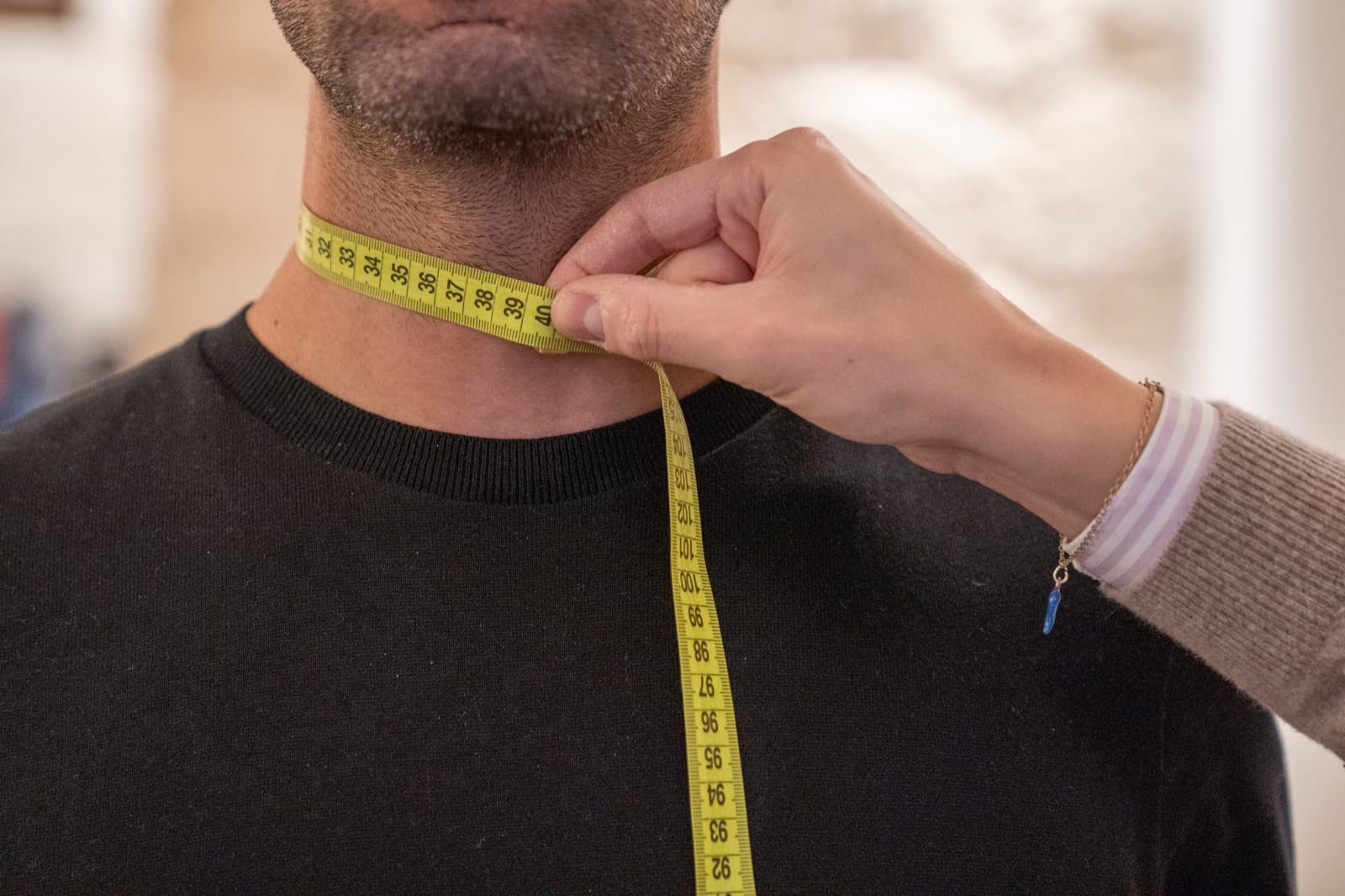
The difference that actually matters
What is the difference between made-to-measure and bespoke?
Every tailored garment starts from a pattern. In made-to-measure, that pattern already exists — a standardised shape called a block — and your measurements are applied to modify it. The garment's underlying geometry was decided before you were involved. It is faster, more repeatable, and for most bodies it is enough.
In bespoke, there is no block. A pattern is drafted for one person, refined across fittings, and kept for future commissions. It accommodates things a modified block cannot: an uneven shoulder height, a pronounced stance, a build that sits outside the range the block was drawn for. It costs more because it is more work, and it is worth more for the bodies that need it.
Personalised ready-to-wear is a third thing again, and often mislabelled as the other two. The cut is fixed and standard-sized; only the specification changes — cloth, lining, buttons, a monogram. Nothing about the fit is adapted to you.
What Caprice captures
What measurements does made-to-measure need?
Caprice records nine measurements: chest, shoulders, waist, hips and seat, neck, sleeve, bicep, wrist and thigh. It also records three things that are not lengths and that determine whether a garment hangs correctly — your preferred fit, your posture, and your shoulder slope.
Those three are the difference between a garment that matches your dimensions and one that matches your body. A jacket drafted for a square-shouldered, upright stance will pull and gape on someone with sloping shoulders and a forward carriage, no matter how accurate the chest measurement was.
For ready-to-wear, three measurements are enough to select a size: chest, shoulders and pelvis, mapped onto the Italian scale from 44 to 70. That is why the app can pick your size instead of asking you to.
- Nine body measurements, plus preferred fit, posture and shoulder slope
- Captured through a guided session rather than a tape measure and guesswork
- Reused across every commission, so you are measured once
How a commission works
How do I order a made-to-measure garment in the app?
You configure the piece: cloth, cut, lining, buttons, monogram. You then see it rendered on your digital avatar, in that specific cloth and that specific cut, and adjust what you do not like — a sleeve length, where the trousers break. Those adjustments go to the pattern rather than into a returns queue. When you confirm, it goes into production and arrives finished.
No atelier visit is required at any point, which is the entire reason the avatar exists. The app quotes the actual lead time for each piece when you configure it — lead times vary by garment and by maker, so a single published number would be misleading.
Your advisor is available throughout, and for bespoke commissions is involved by default: drafting a pattern from scratch is a conversation, not a form.
Who is making it
Who actually produces Caprice garments?
The pieces are produced through the same Italian supply chain and the same makers behind Caprice Bespoke's own catalogue, which has run since 2021 and covers suits, jackets, trousers, ties and pocket squares. The atelier holds a 4.5 rating from 52 reviews on Trustpilot.
That matters for a reason beyond reassurance. The app is not a marketplace layer over anonymous manufacturing — it is an existing tailoring practice with an app attached, which is why the measurement model and the fit vocabulary are a tailor's rather than a retailer's.
Common questions
Do I need to be measured in person for made-to-measure?
No. Caprice captures measurements through a guided session in the app, using photographs, and builds a digital avatar from them. That profile is what the pattern adjustment works from. If you would rather be measured by hand, an advisor can do it in a partner boutique and the figures go into the same profile — but it is not a requirement, and removing that requirement is the point of the product.
What if the garment does not fit when it arrives?
Fit issues on a made-to-measure piece are resolved by adjusting the pattern rather than by exchanging for a different size, because there is no different size — the garment was made for your measurements. Your advisor handles the correction, and the revision updates your profile, so the same error does not recur on the next commission. This is the structural advantage of the model over off-the-rack returns.
Is made-to-measure worth it over a good off-the-rack suit?
It depends on your body. If you sit close to the standard block a maker drafts for, a well-chosen off-the-rack garment with minor alterations will serve you well and cost less. Made-to-measure earns its premium when your proportions differ from the block in ways alterations cannot fix — a chest-to-waist drop outside the usual range, sloping shoulders, or a sleeve and torso length that never come in the same size.